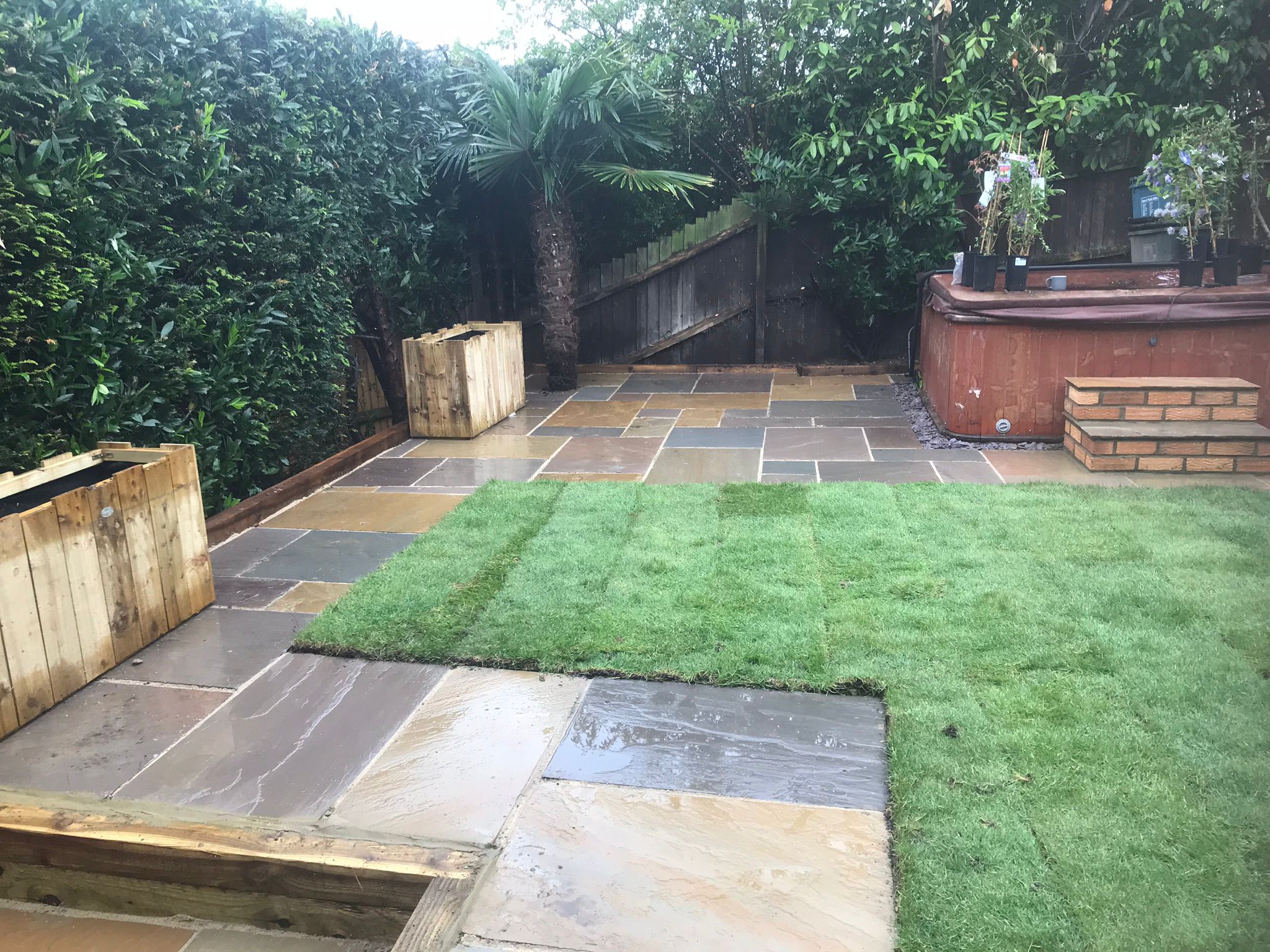
How Can the Right Paving Material Bring an Entire Garden Layout Together?
Paving is often thought of primarily as a practical surface for patios and paths, but its influence on a garden extends much further. The material, format and layout of paving can affect how different areas relate to one another, how naturally people move through the space and whether the overall garden feels carefully planned or assembled from unrelated features.
The most successful paving does not need to dominate the garden. Instead, it creates visual continuity between the property, seating areas, paths, lawn, planting and other hard landscaping. When the material is selected with the complete layout in mind, it can provide the framework that helps the entire outdoor space feel connected.
For homeowners in Long Buckby, Northamptonshire, choosing paving as part of the wider garden design rather than as an isolated feature can result in an outdoor area that is both more practical and more cohesive.
Why Does Paving Material Have Such a Strong Influence on Garden Design?
Hard landscaping creates some of the most permanent lines and surfaces within a garden. A lawn can change shape, planting develops over time and furniture can be repositioned, but a patio or pathway establishes a lasting structure.
The paving material therefore influences more than the area it directly covers.
Its texture, proportions, laying pattern and relationship with surrounding features can help determine the overall character of the garden. Using these qualities consistently can connect separate areas without making every part of the landscape look identical.
Start With the Garden as a Whole
Selecting paving is easier when the complete garden layout has been considered first.
A common mistake is to choose material for one patio without thinking about how that surface will relate to paths, steps, entrances or other areas that may be improved later.
Instead, consider how the garden needs to function as a complete space.
Where will the main seating area be? Which routes need to connect naturally with it? How much lawn and planting should remain? Are there areas that currently feel disconnected?
Once these questions are answered, paving can be selected to support the layout rather than determine it afterwards.
Create a Natural Connection With the Property
A patio often sits immediately beside the property, making the transition between building and garden particularly important.
The paving does not necessarily need to match the property exactly. In many cases, a complementary material produces a more considered appearance than attempting to replicate existing finishes.
Colour, texture and scale all influence this relationship.
A carefully selected paving surface can provide a visual transition between the more structured appearance of the property and the softer lawn and planting beyond.
Use Consistent Materials to Connect Separate Areas
One of the most effective ways to create continuity is to repeat paving materials across key parts of the garden.
For example, a pathway constructed from the same or a complementary material as the main patio can visually connect the two areas even when they are separated by lawn or planting.
This repetition creates a recognisable design language.
It does not mean that every hard surface needs to look exactly the same. Borders, laying patterns or changes in unit size can introduce variation while maintaining an overall relationship between the different areas.
Paving Can Define How People Move Through the Garden
A well-designed garden should make movement feel intuitive.
Paths influence where people naturally walk, while patios create destinations. The paving used across these features can make the relationship between them immediately understandable.
A clearly defined route can guide movement from the property towards a seating area, garden feature or another regularly used section.
This helps reduce informal tracks across lawns and prevents the garden from feeling like a collection of spaces without clear connections.
The Scale of Paving Matters
Paving units come in different sizes and proportions, and their scale can influence how the garden feels.
Larger-format paving can create broad, uninterrupted areas, while smaller units can introduce additional detail and suit more intricate layouts.
The appropriate choice depends on the dimensions and character of the space.
Using paving that is poorly proportioned to the area can make a patio feel unnecessarily busy or leave a smaller garden overwhelmed by large expanses of hard material.
Considering scale as part of the wider design helps the paving sit more naturally within its surroundings.
Laying Patterns Can Influence the Direction of the Garden
The orientation of paving can subtly influence how an outdoor space is perceived.
Lines created by joints and laying patterns can lead the eye towards particular areas or reinforce the direction of a path. They can also help visually widen or lengthen certain spaces.
This makes installation layout an important design consideration rather than simply a technical detail.
The paving material and laying pattern should therefore be considered together so that they support the intended movement and proportions of the garden.
Paving Can Create Clear Outdoor Zones
Many gardens need to accommodate more than one activity.
There may be an area for outdoor dining, another for informal seating and open lawn for general use. Paving can help define these zones without requiring physical barriers between them.
A patio creates a clear functional area while remaining visually connected to the surrounding garden.
Changes in paving direction or carefully considered borders can also provide subtle definition within larger hard-landscaped areas without making the design feel fragmented.
Borders Can Tie Different Features Together
Borders are a useful way of introducing detail while maintaining consistency.
A contrasting paving unit can frame a patio, define the edge of a path or create a transition between hard surfaces and lawn. Repeating the same border treatment in several locations can help connect otherwise separate features.
The key is restraint.
Too many unrelated materials can make the garden appear complicated. A limited selection used consistently often produces a stronger and more coherent result.
The Relationship With Lawn Is Important
Paving and lawn provide very different visual qualities.
Hard surfaces offer structure and definition, while lawn introduces softness and open green space. When the proportions are considered carefully, each can strengthen the appearance of the other.
Clear paving edges can give a lawn a more intentional shape. Likewise, surrounding greenery can prevent a substantial patio from feeling overly dominant.
Rather than treating lawn as the space left over after paving, both should be planned together.
Planting Can Soften Hard Landscaping
Even well-chosen paving benefits from an appropriate relationship with planting.
Borders alongside patios and paths can soften hard edges, introduce height and create a gradual transition into the rest of the garden.
Planting can also prevent paved areas from feeling detached from their surroundings.
The paving provides structure while the softer landscape develops around it, creating a garden that feels established rather than entirely constructed.
Texture Can Change the Character of the Space
Paving texture contributes significantly to the overall appearance of a garden.
A clean, uniform surface can create a more contemporary character, while paving with greater visual variation may complement a more traditional or informal layout.
The choice should reflect the wider garden rather than simply following a particular trend.
At Long Buckby Driveways & Patios, we consider how paving will interact with the property, surrounding landscaping and intended garden layout so that the finished surface feels appropriate to the setting.
Too Many Materials Can Make a Garden Feel Disconnected
Variety can add interest, but excessive variation can have the opposite effect.
If the patio, paths, steps and borders all use unrelated materials, each feature can begin to compete visually. The garden may then feel divided into separate sections rather than one complete design.
Limiting the palette can create a calmer result.
One principal paving material supported by a complementary border or secondary material is often enough to create variation while maintaining continuity.
Paving Can Help Awkward Areas Feel Intentional
Some gardens contain narrow side sections, irregular corners or spaces that do not naturally connect with the main layout.
Appropriate paving can help incorporate these areas.
A path can turn an unused strip into a practical route, while extending a consistent material into an awkward corner can visually connect it with the rest of the garden.
The objective is not necessarily to pave every difficult area, but to use hard landscaping strategically so that previously disconnected spaces have a clear purpose.
Levels and Transitions Need Careful Planning
A cohesive garden is not only about materials. The way surfaces meet is equally important.
Patios, paths and lawn areas may sit at different levels, particularly where the existing garden slopes. Changes between these areas need to be planned so that they feel deliberate and practical.
Steps, edges and transitions can become part of the overall design when the same paving language is carried through them.
This helps prevent individual sections from appearing as though they were constructed independently.
Practical Performance Should Influence Material Choice
Appearance is important, but paving also needs to suit the way the garden will be used.
A frequently used pathway has different demands from a decorative area with limited foot traffic. A main patio needs to provide a practical surface for everyday outdoor use while remaining visually appropriate within the garden.
The surrounding conditions should also be considered when selecting materials and planning the construction.
Good paving design balances appearance with practical performance rather than allowing one to compromise the other.
The Foundation Is as Important as the Visible Paving
A well-designed surface still depends on appropriate construction beneath it.
Preparation, supporting layers, levels and drainage all contribute to how the paving performs. Poor foundations can lead to movement or uneven areas that undermine an otherwise attractive layout.
This is why professional paving involves considerably more than arranging slabs or blocks.
The visible material provides the character of the finished garden, but correct preparation provides the stability needed to maintain that appearance.
Plan Future Garden Improvements at the Same Time
Even if only one area is being constructed initially, it can be useful to consider future improvements.
A new patio might later connect with a path, additional seating area or redesigned lawn. Selecting materials without considering these possibilities can make later additions more difficult to integrate visually.
A wider plan provides consistency.
For homeowners in Long Buckby, Northamptonshire, considering the complete garden at the beginning can help ensure that new paving works with both existing features and potential future changes.
Professional Design Helps Create a Cohesive Result
The strongest garden layouts are usually those in which individual features support one another.
Paving should relate to the property’s appearance, paths should connect useful destinations, patios should be appropriately proportioned and transitions into lawn and planting should feel deliberate.
Professional planning can bring these considerations together before installation begins.
Long Buckby Driveways & Patios can assess the existing outdoor space and help determine how paving can be incorporated in a way that improves both usability and the overall garden layout.
Conclusion
The right paving material can bring an entire garden together by providing visual continuity, defining practical areas and creating clear connections between different parts of the outdoor space.
Material choice is important, but the strongest results come from considering paving alongside its scale, laying pattern, borders, lawn, planting, levels and the character of the property. Rather than treating each patio or path as an individual feature, planning them as part of one landscape creates a more balanced and cohesive result.
If you are considering new paving at your property in Long Buckby, Northamptonshire, contact Long Buckby Driveways & Patios. We can assess your outdoor space and discuss a paving approach that complements the wider garden while providing practical, well-defined areas for everyday use.
Call us on: 01327 223 889
Click here to find out more about Long Buckby Driveways & Patios
Click here to complete our contact form and see how we can help with your driveways.